


NomsAway
Reduce decision fatigue, group conflict and find your “most-fit” restaurant!


Overview
Role & Team
I worked with 2 Product Managers & 1 UX/UI Designer. My role was Designer & Researcher.
Goal
Create a new service that streamlines group decision making processes and reduce fatigue.
What I did
Market & user research, UX/UI design, prototyping testing, team resolution, pitching.
What I delivered
PESTLE / POG, User personas, paper prototypes, wireframes, lo/mid/hi screens.

Get personal with your group restaurant suggestions!🍔
Filter and decide on a top restaurant choice with a group voting feature based on near by cuisines, type of food and user specific preferences for easy group decision making!

Process

Problem
The question of: “Where are we eating?” is a costly affair.
Did you know that 997 million minutes per year on average is spent on deciding where to eat? That translates to around 15 billion dollars as time = money! Especially when traveling in a foreign location, travel groups typically make last minute decisions in regards of food. Instead of enjoying their travels, they fixate, argue and stress!
“How might we facilitate on-the go group decision making while accounting for each members preferences and restrictions?”
Solution

💡Our project aim:
Reduce group conflict and decision fatigue by simplifying group decision making while satisfying needs and preferences of all members.

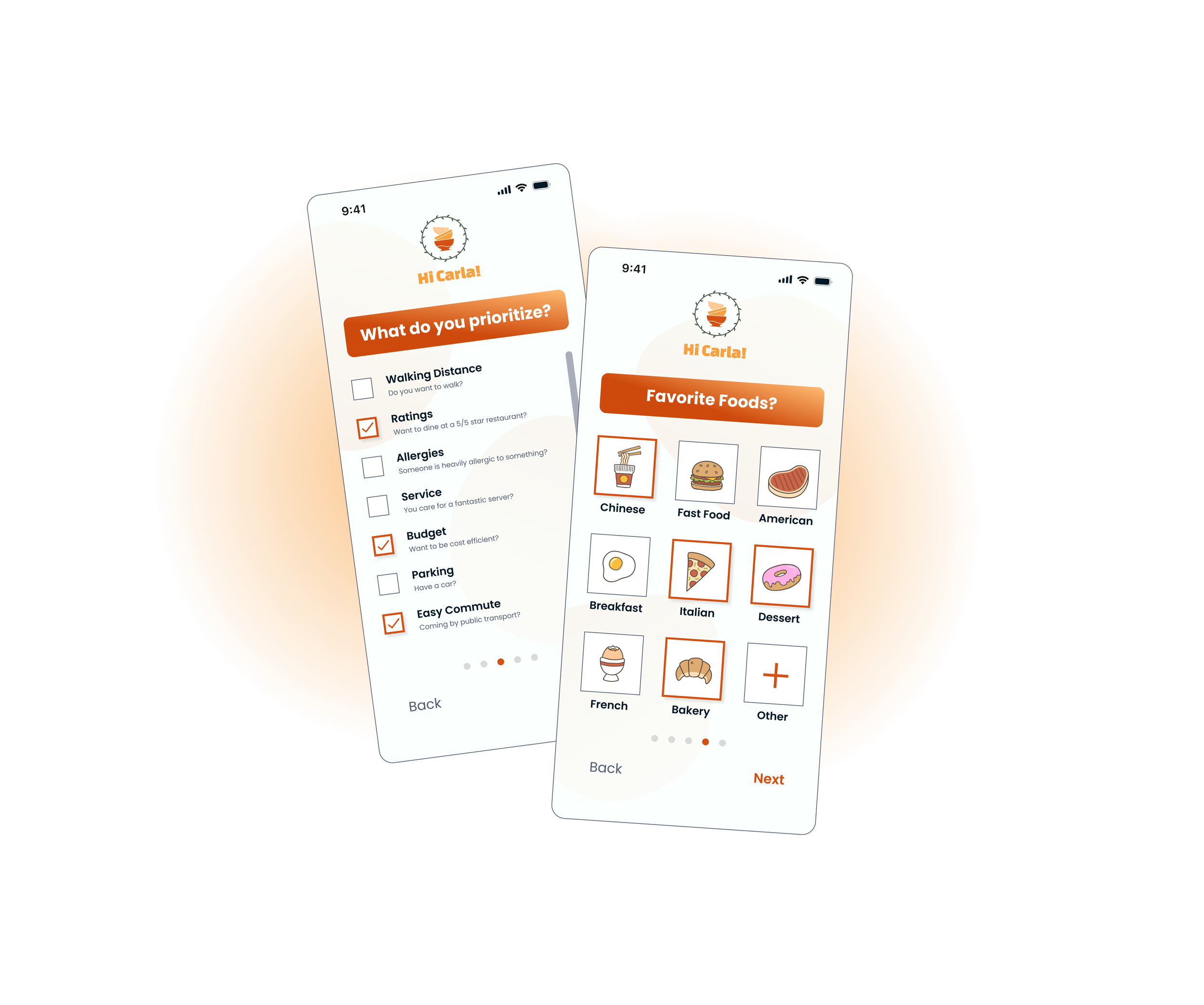
Quick & Informative On-Boarding Experience.
Hassle free registration
Brief overview & outline of app’s goals
Intuitive user graphics


Personalized character types
Understanding who they are traveling with
Traveling habits
Getting personal with the traveller.


Access to multiple recommendation sources.
Recommendations pulled from multiple sources.
Recommendations tailored to specific users.

Location tracking allows on-the-go recommendations
Intuitive, informative and condensed information about any location suggested
Get recommendations along the way.


Access to multiple recommendation sources.
Recommendations pulled from multiple sources.
Recommendations tailored to specific users.
Research
Through this project, we found the value of rapid research… this helped us pivot 3 different times!
Our first initial concept was called “Tip Wise” we are still exploring around the restaurant / food industry however it was more focused on the idea and social construct of eliminating “Guilt Tipping”. Rapid initial research was done through PESTLE / SET analysis.

Economical
Rising inflation caused a “cash crunch” in middle-class (72% consumers income short of spending)
CPI is on the incline at 6.5%; making everything unaffordable.
Sources: CBO Report 2023
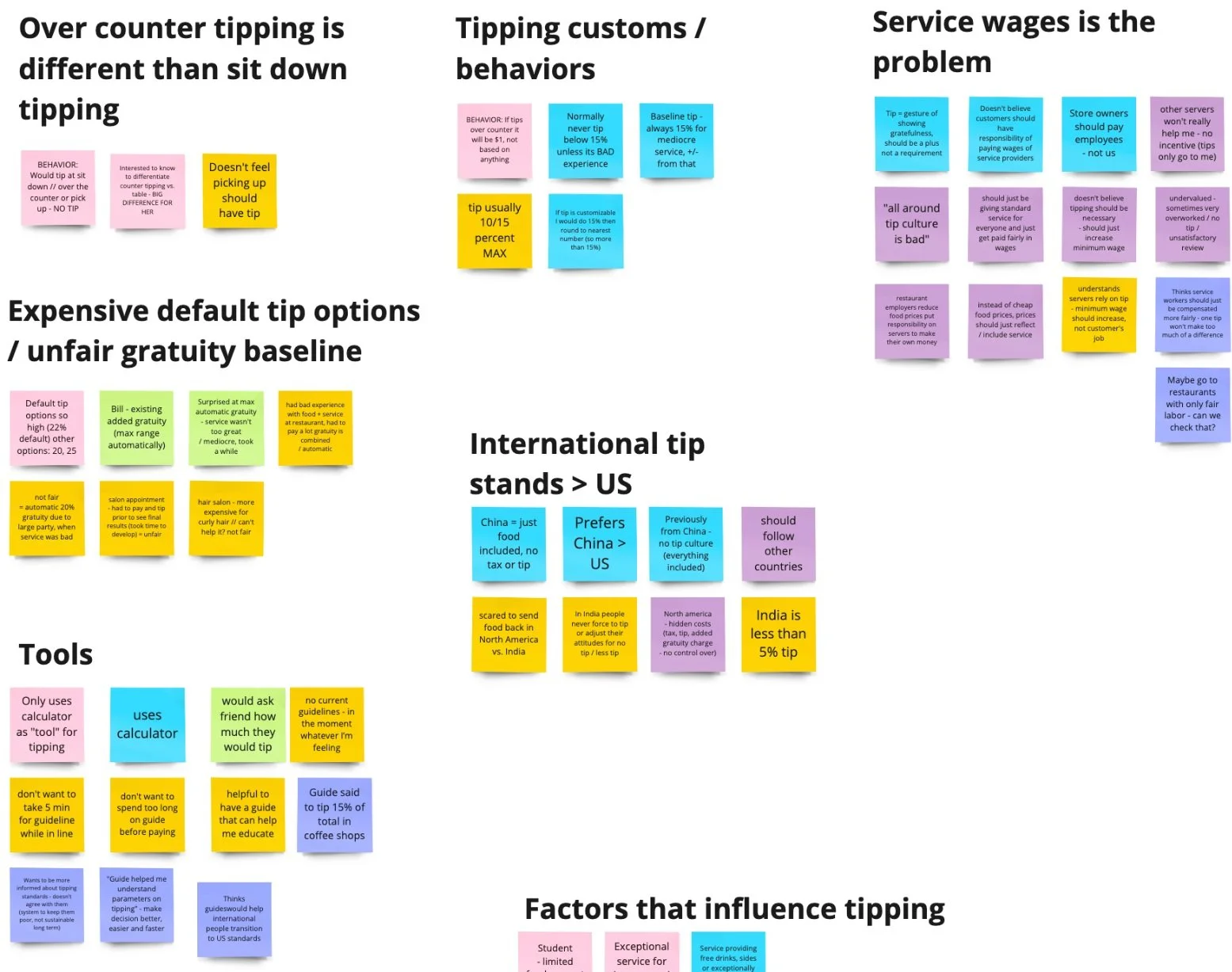
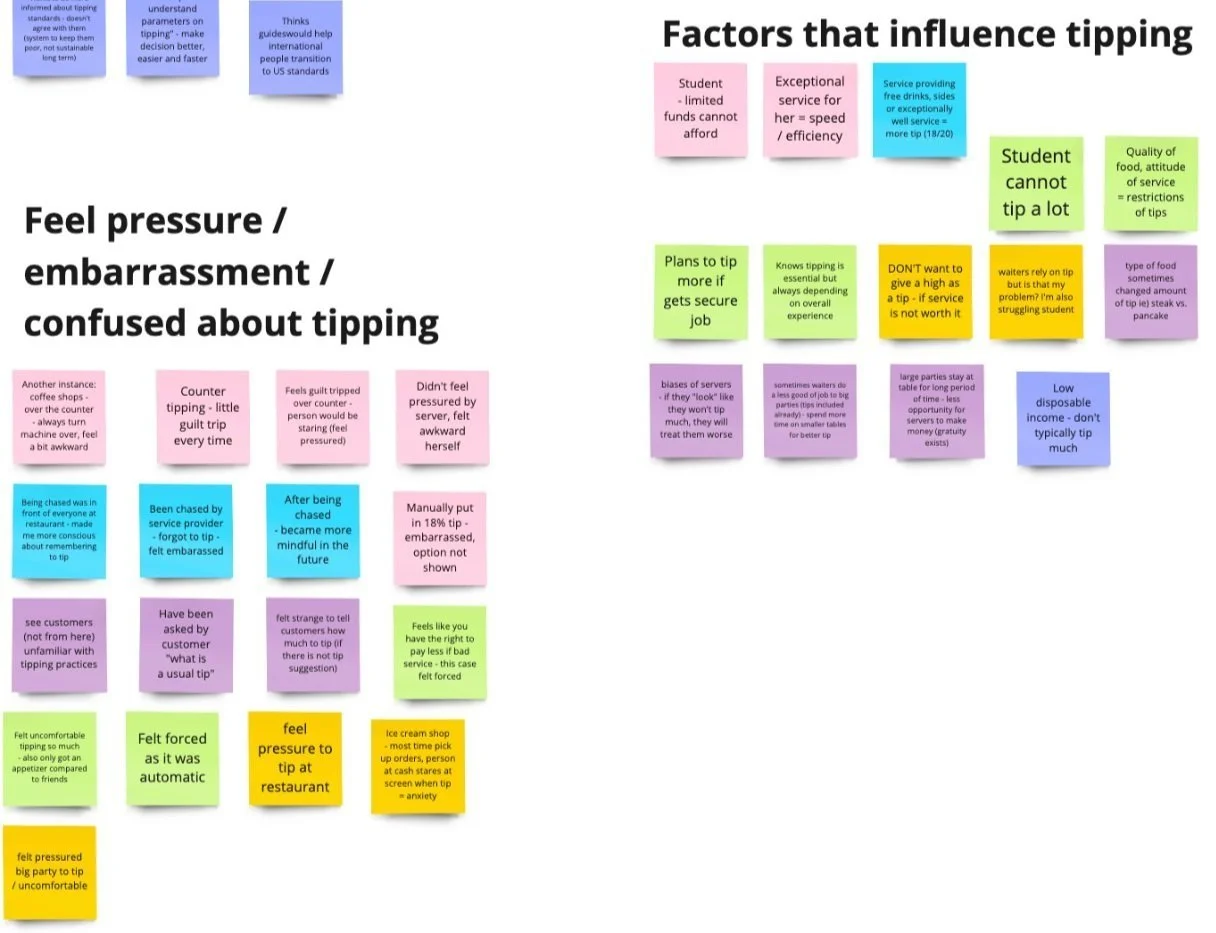
Conducted sessions lead by participants including international students to hear about their personal experiences and interactions with tipping.
Took users (students) to service provider and had them order with online tip guide. Then documented / analysed specific behaviors.
Flow 1
Pivot 2:

New Target Users
Target audience are now travelers (travel / vacation based)

Information Overload


Location & Crowd-Source Service
MVP 2 is now location-based crowd source service that notifies the user
Flow 2


Not only Tipping
Not only tips - expanded to restaurants and all things uncertain (hidden expenses, must-haves/avoids, allergies, etc).
Flow 3
A new user flow is proposed, showcasing sample screens that integrates major changes to our service, based on previous insights.


Feedback is not engaging

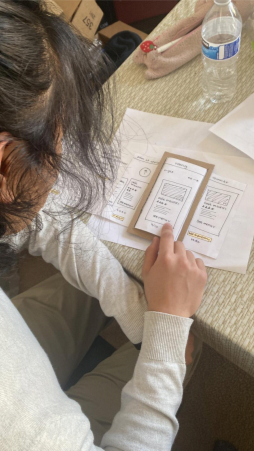
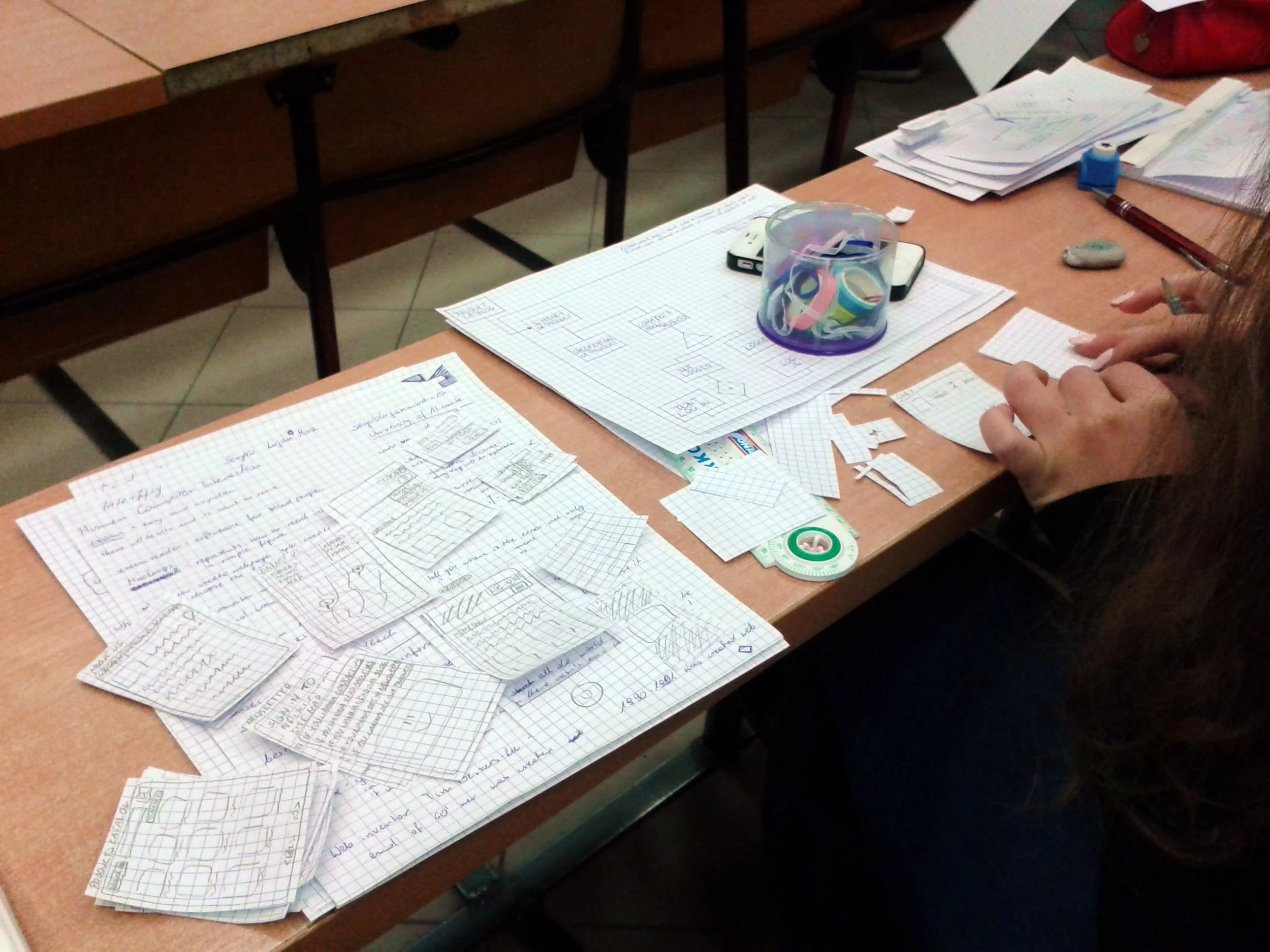
To validate this new iteration, we utilized our sketches and flash cards to implement experience prototyping…
Experience prototyping helps to simulate a realistic environment while following our proposed screens. The goal is to test which specific information users want to see on the app when selecting restaurants. We ran tests through the following:



Insight
Guilt tipping is an “in-the-moment” niche problem, hence, they don’t want to pay for the service

Insight
Users don’t prefer pulling out an app and checking recommended tip, they feel more awkward.

Insight
Customers get accustomed to tipping uncertainties overtime and hence, don’t require a guide in the long term
Problem Scope too narrow
Technological
Point of Sales systems have pushed tipping prompts to consumers. This increased discomfort regarding tipping practices as it became on the spot and unavoidable.
Sources: The Motley Fool


We selected 2 major groups, firstly participants who are customers that suffer from “awkward” tipping practices and also people of the service industry. This allows us to have a perspective from the user receiving the service and the provider.
TipWise

Social
Americans tipped 16% more in 2022. 62% felt pressure to tip.
100k monthly Google searches of "How To's" and generic tipping guides.
Sources: CNBC 2022 survey, Google
Pivot 1:
TipWise- MVP 2
Based on findings and gaps from MVP 1 validation, we knew we had to pivot our idea and expand; tipping is too niche of a problem frame. In MVP 2, we also decided to pivot our target user and this opened an entirely new market and possibilities of features.
Insight
Too many features make it difficult to understand & reduces overall value
Insight
Pain point not big enough to make customers pay, difficulty to scale
Insight
Users don’t have incentive to provide feedback, creates friction in dining process.

Insight
Users can make do with existing solutions, no motivation to continue service
No value proposition
Time to PIVOT! 🚀
Based on the experience prototyping exercise, we knew focusing on “all things unexpected” is way too niche and narrow of a scope to generate value. It was time to expand scope to overall experiences around restaurant and food recommendations… that is a competitive market.
So, what will make our service different?
Ideation
From previous iterations, we found tipping or uncertainties about dining does not drive value!
For MVP 3, we decided to stick with our user segment of “travelers” and take a deeper dive into their problem space. To focus on solving their pain points, we decided to conduct some market research and implement a survey activity for validation.

35 participants, 13 importance factors based on research
Social
Rising popularity for influencer driven tourism
Growing preferences for Local culture experiences
Economical
Tourists contributed 10% out of $899 billion total restaurant sales in the United States (2021)
Geotags help users identify local restaurants
New age tech used to boost market and sales

After conducting 35 individual surveys to rate 13 factors based on importance and satisfaction, restaurant recommendations & ease of access emerged as top opportunities.
This became the new focus and pain paint to solve for NomsAway.


Technological
Opportunity
Finding food during travels

Target User
Leisure travelers on-the-go
Group Travel
77% group travel in USA
After market analysis and secondary research, 20 user interviews were conducted to validate NomsAway as an idea.
Goal is to understand travel…✈️
Travel habits & decision making
Ways of planning
Group vs. Solo travel
& food planning processes…🍔
Major considerations of decision-making
Food / restaurant preferences
Major concerns while planning for food during travel


Food = Spontaneous
Validate Group travel
Insight
Importance of Food
Food was rated very important (4.1 / 5) to travel experience
Insight
>90% users prefer to travel in groups instead of solo for leisure trips
Insight
80% users don’t pre-plan food for trips
Insight
Reaching consensus and finding itinerary friendly restaurant are top concerns
To move from concept to confirmation, we developed interactive prototypes and conducted user testing to validate core assumptions.
The Cost of Consensus
Design
Integration alongside Existing Map Applications with the addition of recommendation features.
We were challenged to determine to decide if this application can be stand-alone or be integrated with existing map applications. We knew that there was a lot of map applications out in the market and wanted to keep this feature as concise as possible. The more we researched the market, we realized that there was a need for more personalized recommendation and on-the-go alternative route options.

Lack of filtration for notifications. Information overload are distracting.

Lack of personalized and real-time recommendations for on-the-go.

Great recommendations but NO route or map generation options.
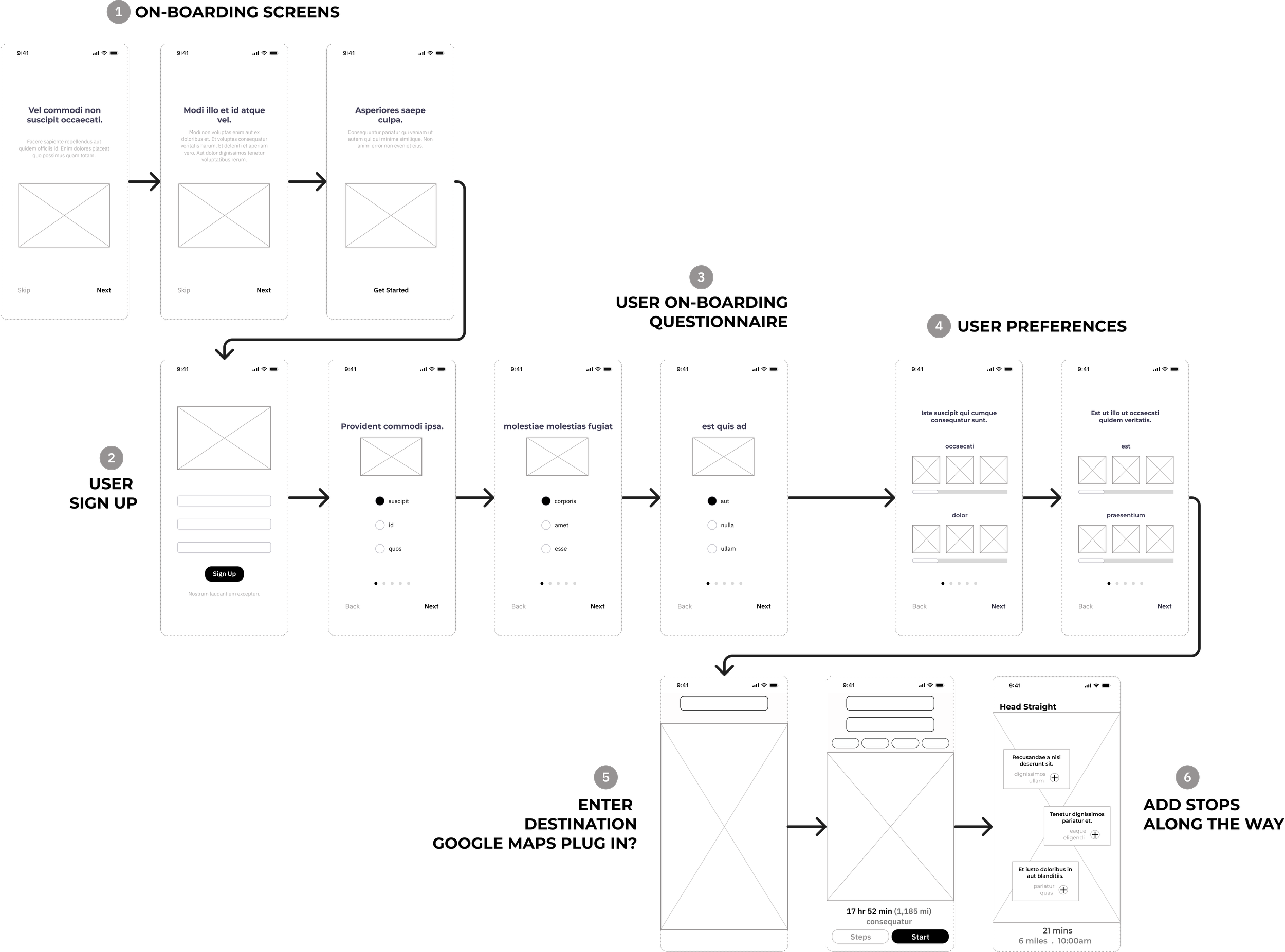
🔀 4 major flows:
Onboarding, Getting to know the User, Preferences and Map view.

We integrated features that allowed “Traveller Personality” types such as nature lover, art connoisseur, foodie, shoppaholic and adrenaline junkie. Research of specific trusted resources that cater to each personality type is also explored. Finally accessibility and frequency of notifications are discussed, users get to choose whether they should be notified depending on the type, number of ratings, time duration and proximity of each stop.
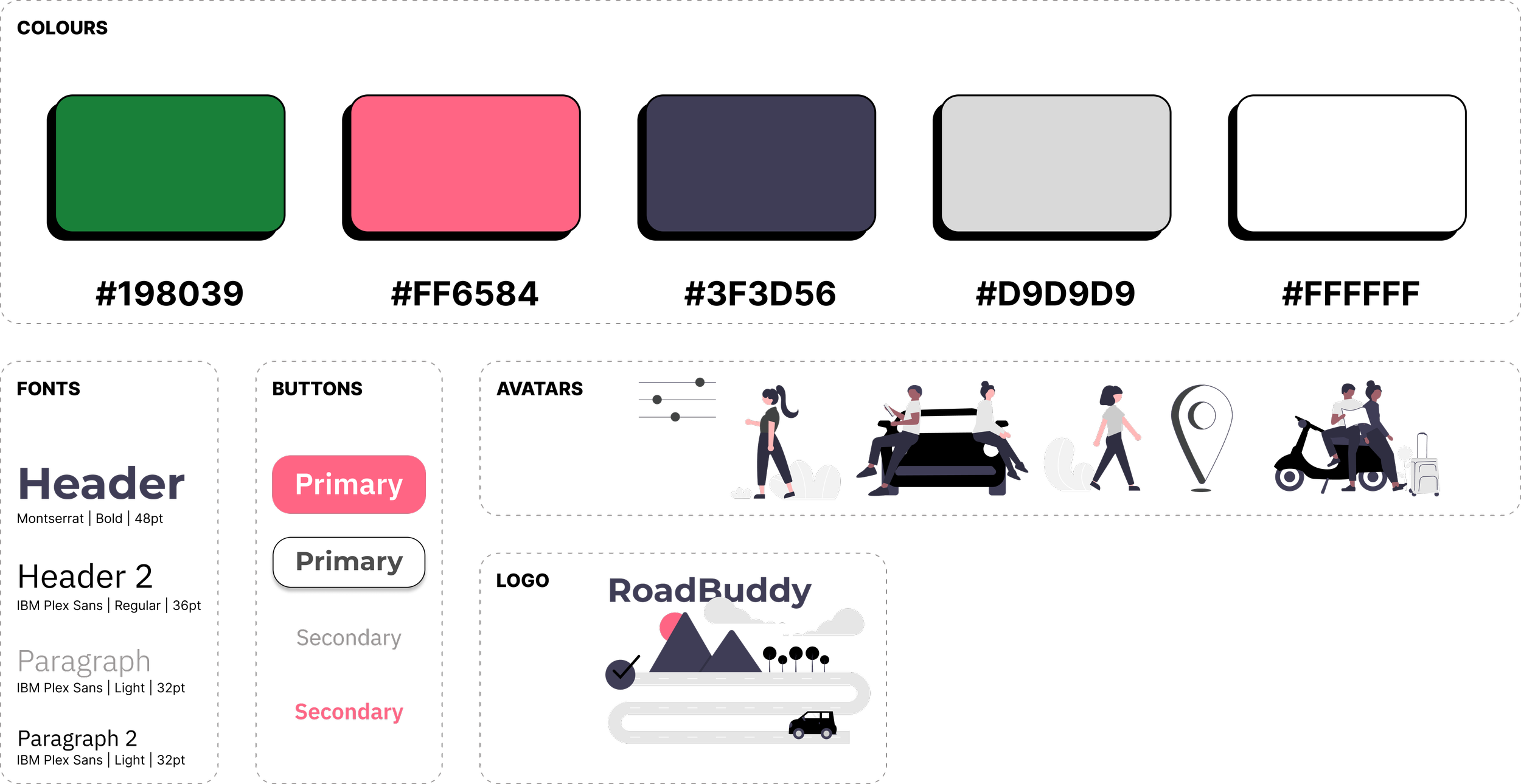
Creating an interactive color scheme while aligning to Google Map’s existing theme.
The color palette is kept quite simple, minimal and easy to read. I took a vibrant pink for selection purposes as it stands out and since this is meant to become a google maps plug in — the green is kept similar to that color palette. Additional avatars and graphics are used to help guide
Reducing information overload and distractions while being on the road.
This is an instantaneous route and stop recommendation application, the amount of content shown must be condensed — to prevent any distractions, confusion or stress while on the road. Through user testing and research, we had to determine what is the most important information shown to that will help dictate them to accept the stop.

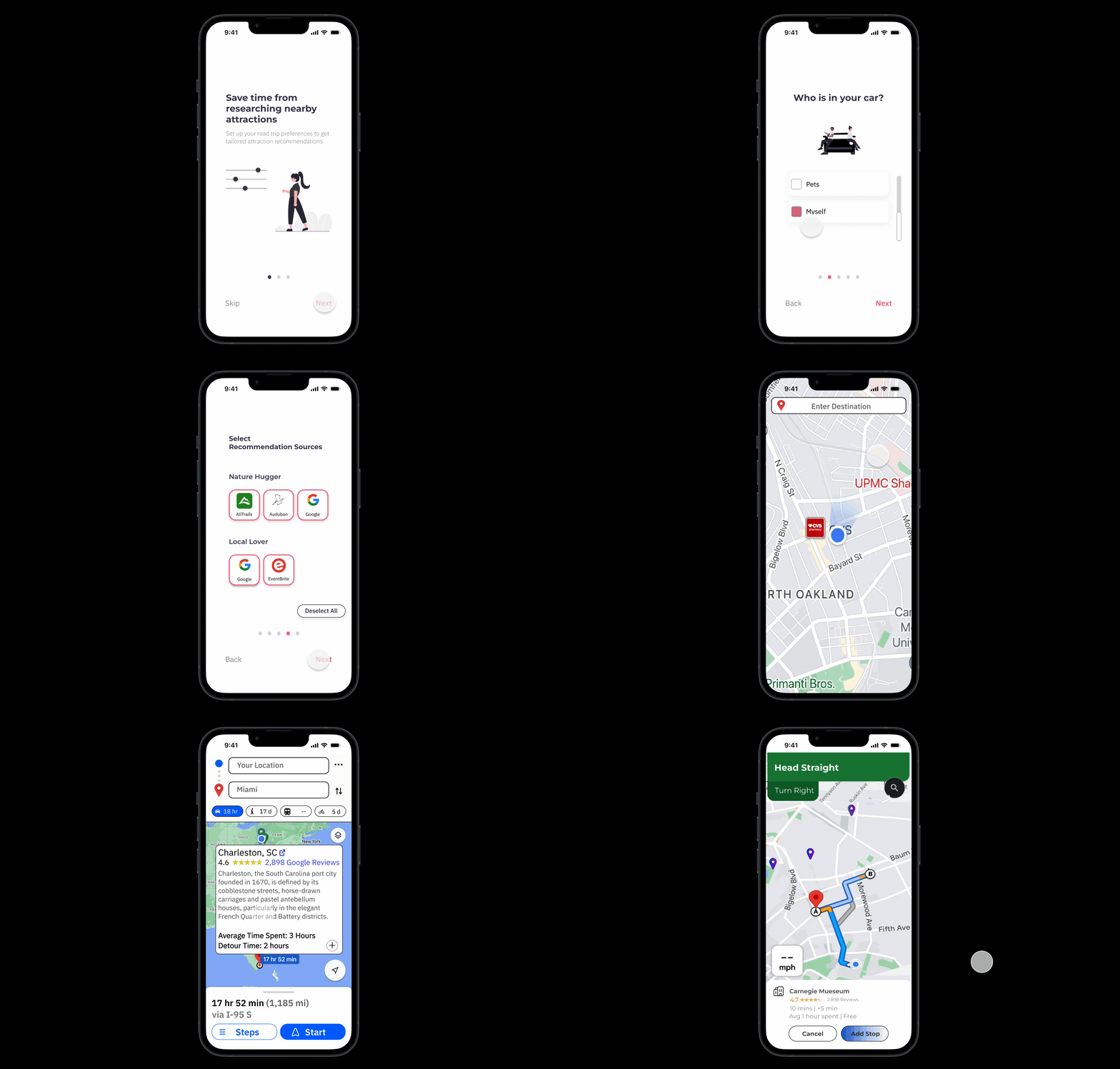
Users found the flows understandable, informative and intuitive as a process. RoadBuddy wants to get to know you.


The boarding screen showcases the functionality and main goals with rapid screen visualizations. This allows users to catch a glimpse of what the app entails and hopefully pushes them to pursue more.


The user has personalized settings directed to their travel types or any other unique road trip situation. Types of resources can be filtered, users can trust personalized external sources. Notification preferences, allows them to have total control over any route alerts.


Let’s GET ON THE ROAD! 🚗💨 RoadBuddy will generate a personalized route with stop options based on user filters. As the trip commences, RoadBuddy will recommend location stops to allow the user to personalize and explore while on the go!
Reflection
🧠 Learnings
Long, challenging but rewarding journey…
Do not be afraid to pivot / reframe ideas: Throughout this journey we had to pivot close to 2-3 times. I learned that sometimes ideas don’t generate enough value and a shift in mindset is needed.
How to balance user needs and market needs: Finding the connection between insights pulled from user studies and basic market research is important. Sometimes they can even contradict each other, therefore definitely distilling down to the most important key factors and trying to find a connection between them is most challenging.
Importance of consistent validation of idea: Since this semester is all about innovating a service; innovation requires constant verification and re-iteration. Therefore feedback loops are essential and constant iteration based on the feedback leads to a more valuable service.
How to utilize the strengths of all group members: Working in a group this semester has taught me how to adapt quickly however utilizing everyone’s strengths to full potential. As some of us (like me) are design oriented and others in other programs can be much more business-savvy, we approach a problem with different scopes. It is important to appreciate these differences and combine knowledge to tackle the problem at hand.